Mundane Astrology Software
The astrology of nations, eras and world events, in both the Arabic and Persian tradition along with the modern cyclical approach, and with a database of world charts.
The Mundane Astrology module covers both the traditional and the modern astrology of nations and eras. For traditional work the Arabic and Persian doctrines are available. Their methods include the great conjunctions and their eras: mean conjunctions (multiple medieval methods), mundane directions, mundane profections, the mighty firdaria, the dawr, and the thousands and turns of Abu Ma'shar and his predecessors. For modern political astrology work you get the planetary cyclic indexes, the Barbault index, lunation families and solar activity. You also get a database of more than 1,200 world events and historical figures, along with AstroCartography maps, instability graphs and maps of public mood.
Great Conjunctions
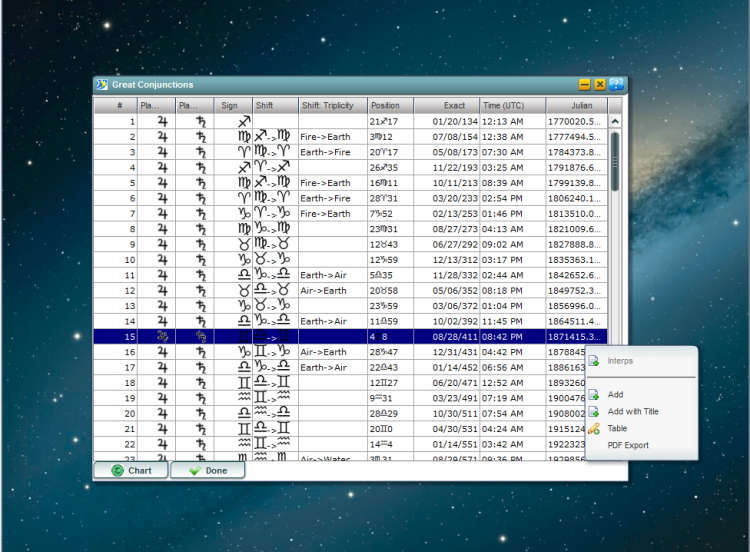
You can list the great, middle and lesser conjunctions of Jupiter and Saturn with their triplicity shifts. Mean conjunctions are calculated with multiple medieval methods, according to Kushyar, Abu Ma'shar, Masha'allah, Ridwan Efendi, Ibn Abi al-Fath al-Sufi, Ibn al-Shatir, Musa ibn Nawbakht and Noufid Khalid. With one click you can calculate a local or relocated chart for any conjunction, time lord change or mundane firdaria period. Dates before and after the common era are supported, and you can export every table to PDF.
Mundane Time Lords and Directions
All the main predictive methods of the Arabic mundane tradition are included:
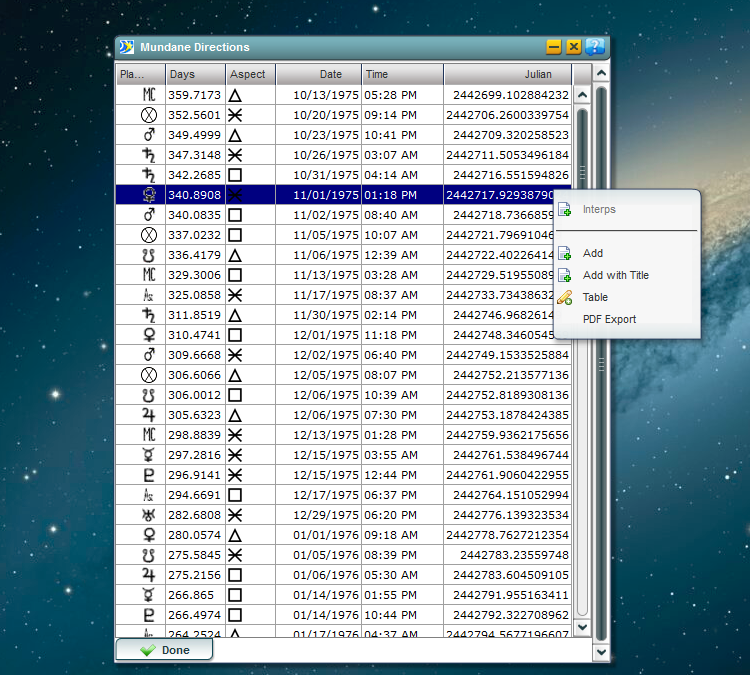
- mundane directions in right ascension and in longitude, with six time keys (Umar al-Tabari, Ptolemy, Naibod, Cardano, Placidus and the symbolic degree), with or without the significators' latitudes
- seven types of mundane profections: from the Ascendant or the MC of the ingress of the triplicity shift or of the nearest great conjunction, from their signs, or from the Aries ingress
- 12 traditional types of profection periods: big, middle and lesser, the Persian and Baqqar middle and lesser, monarchy, malefic, Qisma, solar return, annual and 360-degree profections, plus the era profections
- the mighty firdaria, big, middle and lesser, according to the chronologies of Abu Ma'shar and Masha'allah
- the dawr, according to the methods of Abu Ma'shar and Masha'allah
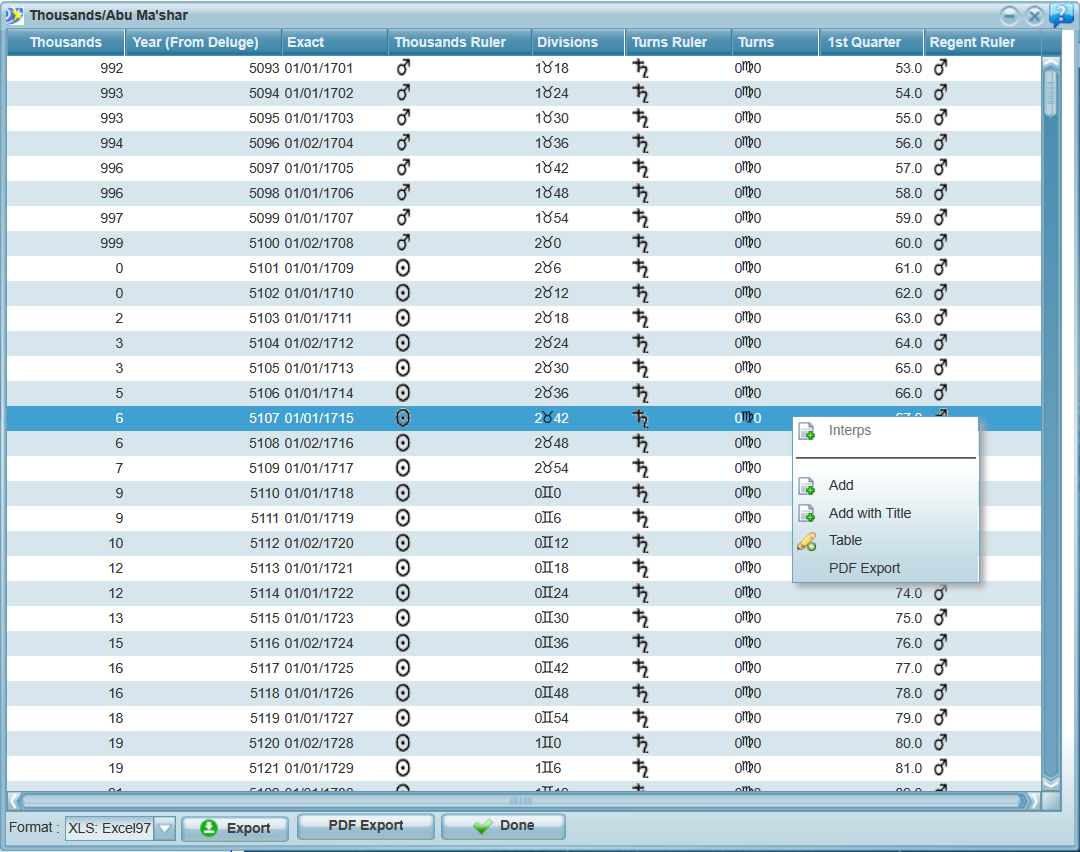
- the thousands and turns, with their regent rulers, according to Abu Ma'shar, Ibn Nawbakht, al-Tabari, Masha'allah and Kushyar
- mundane Arabic parts
- eclipse activation periods and influence ranges, according to Ptolemy
You can choose from six types of year: tropical, sidereal, Egyptian, Abu Ma'shar's, Masha'allah's or Bija-corrected.
Cyclic Indexes, Lunation Families and Solar Spots
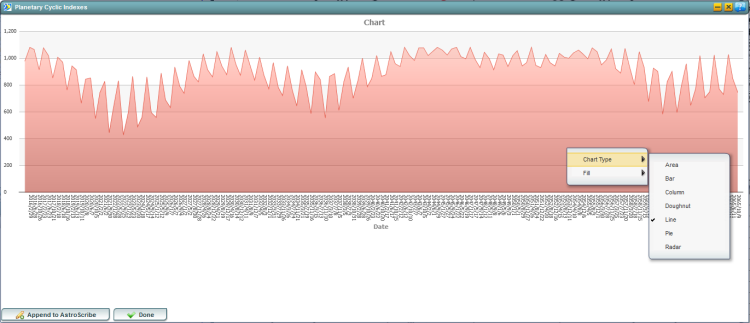
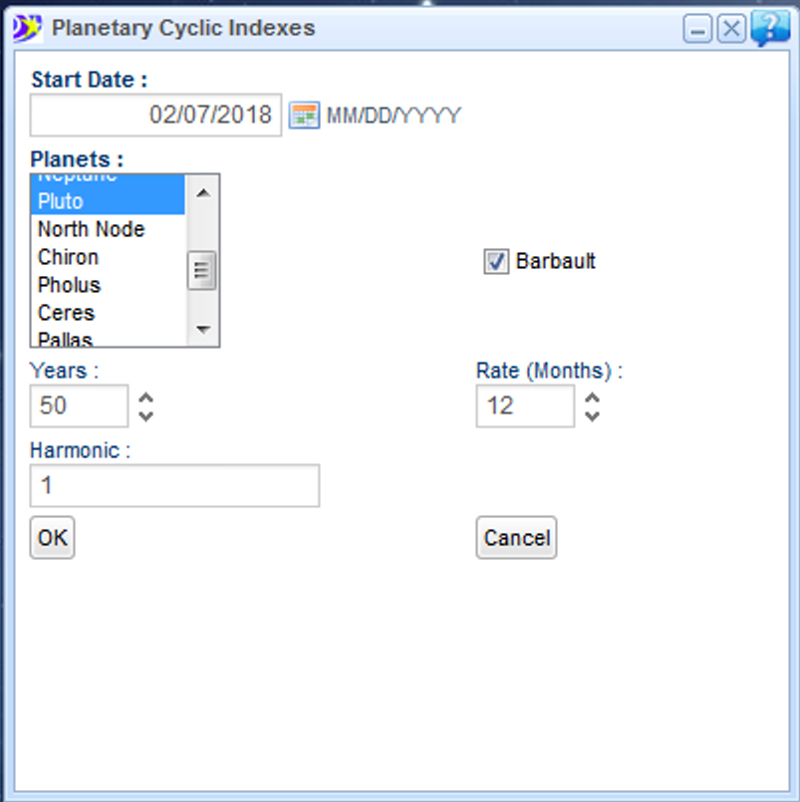
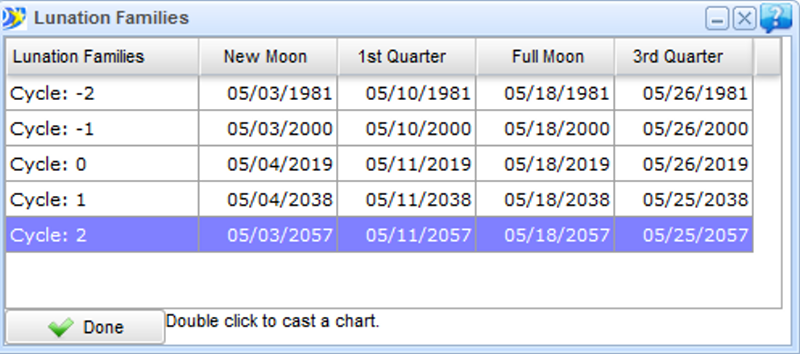
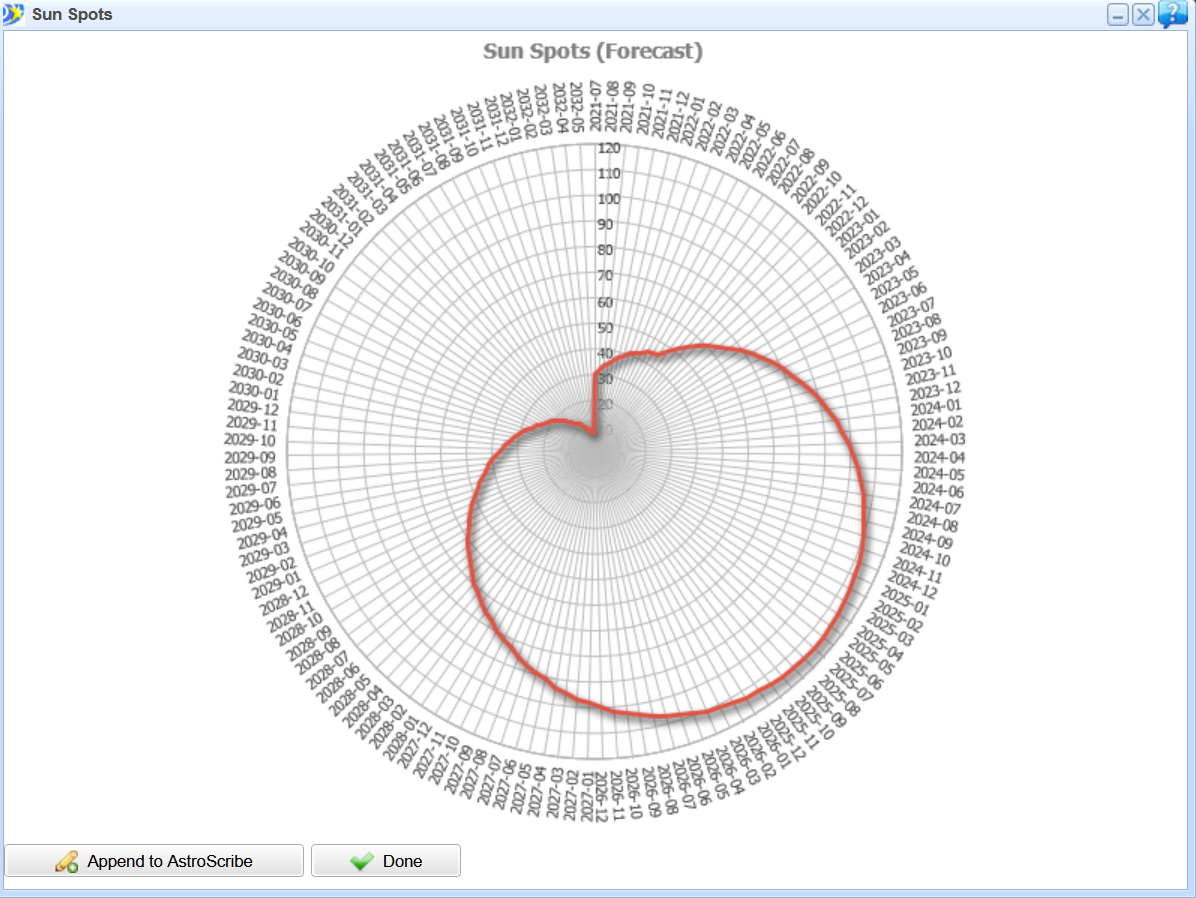
You can view the planetary cyclic index graphs and the Barbault index, and define your own (user-defined) indexes in any harmonic, with the North Node and the six major asteroids available alongside the planets. Lunation families are based on the work of Dietrech Pessin. The Solar Spots tables and graphs show the observed and the predicted solar activity, as a series and as a radar graph.
World Events
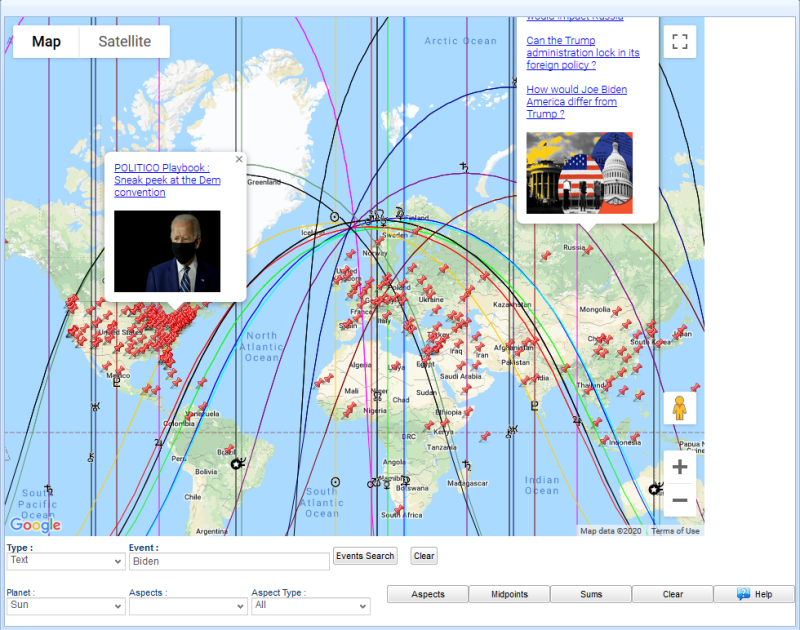
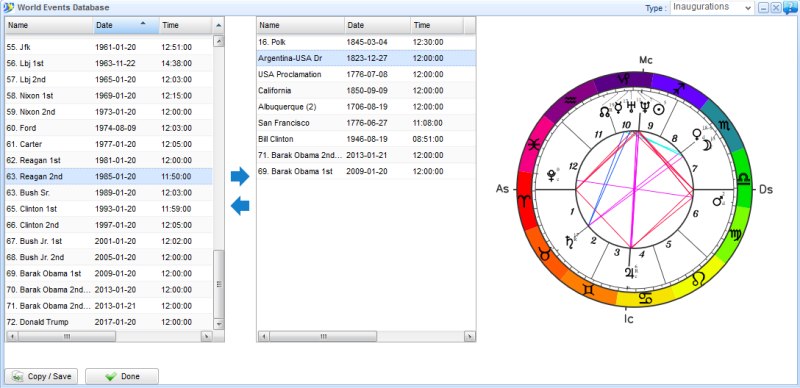
The World Events module includes a database of more than 1,200 charts: historical figures, the US presidents and their inaugurations, the horoscopes of countries, of the US states and of the major US cities, and the charts of US diplomatic relations with other countries. You can use the advanced chart search over the mundane, world events and political events databases. Based on the news of the day, the module shows:
- AstroCartography maps of world events
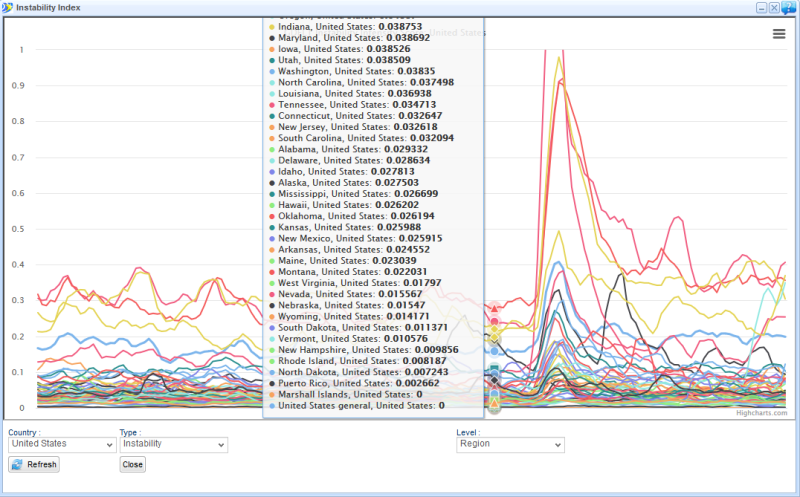
- a world instability timeline with a six-month look-back
- maps of public mood by country, from the faces and the headlines in the news, and the astrology of negative and positive headlines
Earthquakes and Epidemics
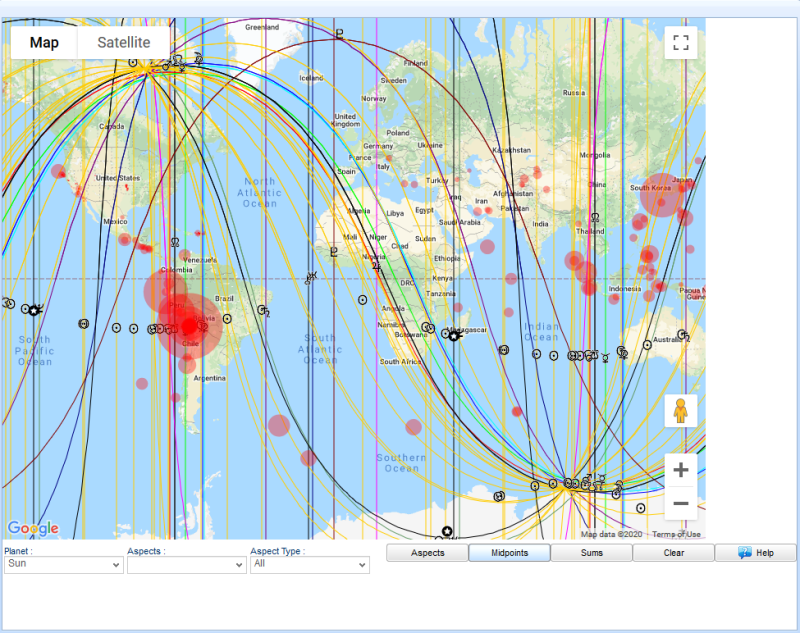
You can see recent earthquakes on the AstroCartography and geodetic maps as they happen, with the aspects, midpoints and planetary sums at their epicenters. The COVID-19 pandemic was mapped the same way, with cases by location. You can find these maps in AstroCartoGraphy and Astro Maps.
Weather and the Revolution of the Year
The Meteorology table forecasts the weather of the coming months from the New and Full Moons at your location, as the classical authors did. For each lunation it shows the planet that rules it by term, that planet's sign and its phase with the Sun, and what Haly and Albumasar say it signifies for the air, the winds, the rain and the sea. The last lunation before each season is marked. For the Revolution of the Year, you can see what the same authors say each planet signifies for kings and the people, for war, disease and the harvest, at the Sun's entry into Aries or any other cardinal sign. The readings come from the collection Girolamo Cardano published in 1663, in AstroApp's own English translation.
Frequently Asked Questions
Which mean conjunction methods can I use?
You can calculate mean conjunctions according to Kushyar, Abu Ma'shar, Masha'allah, Ridwan Efendi, Ibn Abi al-Fath al-Sufi, Ibn al-Shatir, Musa ibn Nawbakht and Noufid Khalid.
Can I calculate mundane profections?
Yes. You can calculate seven types of profections from the ingresses of the triplicity shifts and the great conjunctions, in 12 traditional types, plus the era profections.
Can I define my own planetary index?
Yes. Using the index editor you can combine any planets, the North Node and the major asteroids, in any harmonic.
Can I use BC dates?
Yes. The conjunction tables and the time lords work for dates before and after the common era.
What is in the world events database?
More than 1,200 charts: historical figures, the US presidents and inaugurations, countries, US states and major cities, and US diplomatic relations. You can search all of them with the advanced search.
See Also
- AstroCartoGraphy and Astro Maps
- Medieval tradition
- 13 Signs zodiac, which also includes the Solar Spots
- Research, for the advanced search